The word spoiled has a negative connotation. According to Wikipedia, “A spoiled child or spoiled brat is a derogatory term aimed at children who exhibit behavioral problems from being overindulged by their parents or other caregivers. Children and teens who are perceived as spoiled may be described as “overindulged”, “grandiose”, “narcissistic” or “egocentric-regressed”. This sounds like a nightmare! Why does the phrase, “spoiled child” get used so freely then? When reading the definition, this does not sound like a child or person, for that matter, that is unpleasant to be around? Could it be that what we are saying as a society when we use that phrase is that we want to teach our children kindness, empathy, gratitude, humbleness, the “value of a dollar”, and hard work? Is the question we need to ask ourselves as parents is, “how do we not create an entitled child”?
My husband and I have asked ourselves this question many times over the course of our parenting journey. We continue to keep entitlement at the forefront of our mind, especially because we are raising our children in a time that is very different from when we were growing up. Generally, children today live in an immediacy society. They have almost EVERYTHING at their fingertips; albeit amazon, door dash, streaming services, etc. Additionally, my husband and I ask ourselves, how do we give our children the “desires of their heart” while making sure that they do not turn into entitled, self-righteous humans. This tension has been challenging to manage at times, especially when we live in an area that perpetuates that children and teens get what they want. Our children are fortunate, they have had a very charmed and protected childhood. All of which have been afforded to them by intentional choices and sacrifices that we have made for our children. So, with this reflection, it feels as though, we are then responsible for making sure that this “charmed” lifestyle, does not tarnish their views of reality. The reality that so many other children and families in the world do not share.
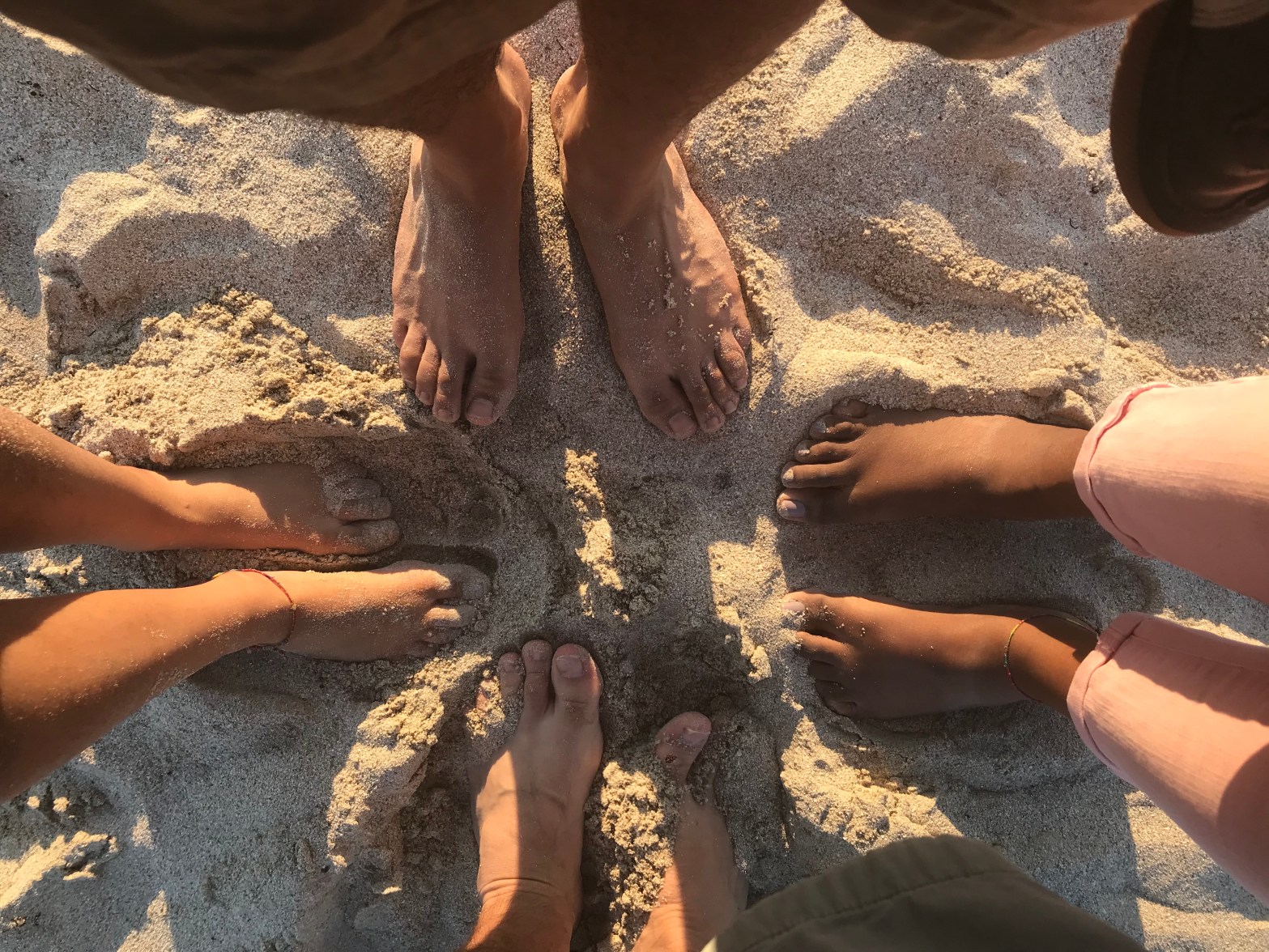
These are the things we have done to try to combat raising entitled children. I will preface this reflection by saying that I have to continue to stay intentional and revisit these conversations and strategies, because entitlement can and will rear its ugly head in moments that we least expect it. So, raising our children in the Bay Area of California in an upper middle-class area was the first realization that we had to try to make sure that our children stayed grounded. According to Lockett (2019) grounding or earthing is is a therapeutic technique that involves doing activities that “ground” or electrically reconnect you to the earth. This practice relies on earthing science and grounding physics to explain how electrical charges from the earth can have positive effects on your body”. In addition to the following strategies, spending time in nature helps with grounding and perspective.
Conversations about gratitude are a normal occurrence in our home. We have always talked about how fortunate we are to have what we have. We even talk about our time as a gift. I grew up where my parents worked A LOT and were not able to take me to and from school. So, the fact that I have always been able to do this made me keenly aware of how fortunate my children are to have me so involved in their education. Since our kids started school, all of our car rides home centered around identifying what the best part of their day was (“their apple”) and what could have been better (“their onion”). These early experiences helped develop emotional development and literacy, deepened our relationship, helped us identify any issues happening at school or in their day, and helped us keep them focused on how wonderful it is that they could identify a positive experiences/occurrence in their day.
“When eating fruit, remember the one who planted the tree.” ~Vietnamese Proverb
Our children have had their passports since before they were crawling and have traveled all over the world by virtue of being half Italian and European citizens. This reality in it of itself has afforded them experiences that many adults have not had. My husband and I started very early framing these experiences around how blessed we are as a family to be able to travel to see family and friends in other parts of the world. In our conversations, we talked about how this was not normal for everyone to have these experiences even though it seemed like it was because many of our friends had similar experience. Because it was a privilege that we able to travel, we therefore could not take these experiences for granted. Talking about privilege with children from an early age helps with their understanding of the responsibility they have to earn or grow into their privilege and use it for good.
“When it comes to life the critical thing is whether you take things for granted or take them with gratitude”. Gilbert K. Chesterton
Another strategy we employed with our children is that we reserved gift giving for birthdays and holidays. When our children would ask for things at the store, we would resist the urge and not buy it. This was an intentional decision we made, first out of pure necessity, as a young couple with living in a small apartment that would easily get cluttered with all of the baby gear and toys. When the kids would ask for the toy, we would say, “you don’t need that right now, but we will put it on a list and talk about it for your birthday or the next holiday”. This was not always accepted as an answer, however we worked through the process and stood our ground. Did you notice the word “needed” in the last sentence? This was another strategy, I often use it with my children by asking them, “is this something you need or want?” This has helped develop their reflective capacities and negotiating and reasoning skills immensely!
Speaking of birthdays, we feel birthdays are super important and we love to celebrate our children. However, they can be another pit fall, so we made the decision that our children could either request a birthday party or a birthday gift and a special dinner to celebrate their birthdays. We made a budget each year for both children that would accommodate their choice (the same amount of money). The kids never knew or needed to know our budget, but this is what we did. We feel this strategy helped them see that throwing a party was the birthday present in itself that cost money and required our time. Our now teenager, started doing the math at about age 13 and has not had a party in a couple years in exchange for a coveted gift; our savvy negotiator!
Another strategy we employ as it relates to gifts is that we have always done big toy and clothing purges throughout the year. When the kids were really little, they would get too upset to help. As they got older, however, we would work together identifying clothes that did not fit (this was hard for our daughter as she wanted to keep all of her “pretty clothes”) and toys that they did not play with. A tip, we found that worked well was that about a month before the big giveaways, we would watch to see what toys they were not playing with, this was then presented to them as evidence for leveraging the giveaway. The big purge is always framed around donating these items to other children that would use them and making space for other items that they needed and wanted. Usually, the big purges happen around their birthday/summer and the winter/holidays.
Money management is another strategy I believe help children stay grounded. We started our children on a chore and allowance system when they were about 5 or 6-years-old when they started to learn about money in school. We started off with talking about the importance of contributing to our household as a member of the family. We explained the difference between keeping their rooms cleaned and toys picked up as an expectation for being in our family. Whereas, doing other things outside of these expectations help the entire family. This exercise helped identify things they could do around the house to help everyone. For example, taking out the trash, emptying the dishwasher, loading the dish washer, replacing soap in the soap dispensers, replacing toilet paper, helping with the family pet, putting away their laundry, etc. We then agreed upon an allowance amount based on their age and talked about how they could earn it. We set an amount and they could earn up to that amount. So, a $2.00/week allowance allowed us to give coins at times, which also helped with learning to count money. The educator in me is ALWAYS looking for the teachable moment! Over the years, our children have sat us down for meetings and negotiated their new allowance rates, negotiated chore assignments, and petitioned various responsibilities for each other. Making family meetings a regular occurrence in your house sets the stage for these types of experiences to happen. Our 15-year-old asked for a bank account for Christmas. So, we helped him open his first checking account with an actual “debit card” where he has access to his money and can start the managing experience. This process has now opened the door for conversations about debit cards verses credit cards, overspending, the importance of saving, “balancing a checkbook”, financial security on the internet, employment and other ways to earn more money, and how quickly money flow OUT of an account. The implementation of a chore and allowance system helped us teach our children that they could buy themselves things outside of a special occasion by saving up and earning it. These lessons seem to slow down the immediacy issue and help foster a work ethic.
Other strategies that we use with our children are volunteerism and donating. Over the years, our children have volunteered in homeless shelters, churches, elderly homes, and other community agencies as a way to serve others. We talk a great deal in our home about how we believe humans are put on this earth to be in relationships with other, to help serve other, and help make the earth a better place. So, being of service is important to us. Our hope is that these experiences and their understanding of WHY we need to do them, will help ground them and offset their entitlement. These experiences also help them see other realities and experiences. Our children also know about the organizations we donate to yearly and have made their own financial donations.
To whom much is given, much will be required (Luke 12:48)
Children are a product of nature and nurture. This means that they are and will become who they are genetically combined with how they are raised by way of their experiences. As parents it is our responsibility to help answer the question, is my child spoiled? We hold the responsibility to shape and mold their experiences and exposures which influences their outlook on life. I will continue to stay present and hold the line of immediacy, convenience, “keeping up with the Jones’”, and just giving in because they have worn me down. I will make mistakes and get back up and try again, so that my husband and I continue working towards making sure our children are not entitled. I hope that my reflections on this journey help you with ideas for your family.
Strategies to combat entitlement:
“Flying starts from the ground. The more grounded you are, the higher you fly.”
J.R. Rim
- Spend time in nature
- Encourage your child to identify positive happenings in their day.
- Help remind your child that their reality and experiences are not true for everyone.
- Try to limit impulse buying for children; reserve gift giving for a special occasion.
- Implement periodic clothes and toy purges.
- Adopt a chore and allowance system.
- Serve others through volunteerism to help children gain perspective.
- Make donating (time, money, things) a priority.
For questions or support with this topic, feel free to reach out for a consultation. The first consultation is free.
 Educational Consultant